
Ever walked into a room and felt like you were suddenly in a cozy coffee shop or a dramatic thriller? Welcome to the enchanting world of lighting alchemy, where artistic expression comes alive! As creators, we wield color and shadow like wands to conjure emotions and tell tales. From mastering natural light to dissecting iconic cinematic scenes, I’ll take you on a vibrant journey of visual exploration to explore how the best in the game harness these elements in visual storytelling. Ready to illuminate your creative path? Let’s dive into the magic!
The Power of Color in Lighting Design
What if the right color could turn a drab room into a fabulous wonderland? Picking the perfect hue in lighting design can really amp up a space, enhancing the mood and atmosphere.
I like to kick things off with a color wheel tool, like Sherwin-Williams’ ColorSnap, which lets me visualize all the juicy options out there.
Then, I bring in adjustable RGB LED bulbs to see how those shades play nice with my decor. I love capturing different looks throughout the day-it’s like a reality show for my room, complete with natural light drama that changes everything.
If I notice some shades looking off, I just roll with it and consider the usual suspects: bulb temperature (warm vs. cool) or those sneaky wall reflections. And if all else fails, I whip out my trusty color correction app to fine-tune my final choice like a pro.
Understanding Shadows and Their Impact on Visual Art
Picture this: I’m staring at a piece of art where the shadows are the real stars of the show, holding all the juicy emotional secrets.
For years, I found myself wrestling with the challenge of infusing my canvases with feeling-let’s just say they often ended up looking as flat as a pancake without the right lighting dynamics.
Then came my lightbulb moment: experimenting with chiaroscuro, that dramatic dance between light and dark. Suddenly, the shadows were no longer just lurking in the background; they were taking center stage.
I grabbed my charcoal like a magic wand and kept my color palette limited to really make those shadows pop, creating forms that practically begged viewers to lean in closer.
Sure, refining this technique felt like an endless game of trial and error that kept me up late, but those evenings spent studying light were worth it. I slowly transformed my vulnerability into a signature style that struck a chord with audiences, making them feel all the feels.
The Psychology of Color in Visual Storytelling and Mood Creation
Did you know that colors can really pull at your heartstrings and shape stories in ways that might surprise you? Take blue, for example-it’s like the chill friend who always shows up on time. That’s why so many corporate brands love it; it screams calmness and reliability.
Now, let’s talk about red. This color is basically the life of the party, whipping up feelings of urgency and excitement. Marketers use it like a magician pulls a rabbit out of a hat to grab your attention.
And green? Oh, green is all about balance and nature, which is why eco-friendly brands are all over it like a hipster on a bicycle.
But here’s the kicker: while each color has its own vibe, you’ve got to think about cultural contexts. White might be the color of purity in the West, but in some Eastern cultures, it’s more of a mourning color. Understanding these nuances can seriously level up your visual storytelling game!
Techniques for Using Natural Light in Photography and Filmmaking
As the sun rises, it doesn’t just turn on the lights; it sets the mood like a DJ at a party, changing the vibe with every passing hour.
A lot of folks totally misjudge how to harness that glorious natural light for creative lighting. You know, common blunders include forgetting that the time of day can totally change light quality, slapping up heavy drapes that block out all that precious sunshine, and ignoring reflective surfaces that could brighten up their space like a disco ball.
Then there are those who forget to tweak their camera settings as the light shifts, ending up with photos that look about as exciting as a plain toast. And let’s not even get started on those who ignore the weather-hello, missed opportunities for capturing dramatic, atmospheric shots!
Staying aware and adapting to those natural light changes is the name of the game if you want to make the most out of it.
Artificial Lighting: Types, Effects, and Color Temperature
Ever stop to think about how different types of artificial lighting can totally mess with your mood? It’s like magic-or maybe more like science, but who’s counting the dramatic lighting effects?
The right lighting can flip the emotional script in a space faster than you can say “mood lighting.” For instance, soft, warm light? Instant cozy vibes, perfect for curling up in the living room or unwinding in the bedroom.
On the flip side, bright, cool lighting can turn me into a productivity machine, sharpening focus and keeping my brain in high gear-just what I need in the kitchen or my home office.
To pull off these lighting tricks, I’ve learned to rely on dimmable LED bulbs for that sweet versatility. And let’s not forget about smart lighting systems like Philips Hue. With just a tap on my phone, I can switch up the color temperatures and intensities, giving me full control over the ambiance. It’s practically like being a lighting wizard in my own home!
Creating Depth with Shadows and Highlights
Creating depth in my artwork is like a magic trick, and the secret ingredient? Mastering the art of shadows-who knew they could be so dramatic in creating visual impact?
I start by figuring out my light source because, let’s be honest, the way it dances around my objects can make or break the whole vibe. A soft pencil comes into play as I scribble some basic shapes and map out where those shadows are going to hang out, all while keeping an eye on the contours of my masterpieces.
Then it’s time to layer those shadows like a pro. I apply varying pressure on my pencil-light as a feather at the edges and heavier towards the base. For that extra touch of realism, I whip out a blending stump to smooth things over.
If my shadows end up looking like they’ve had a rough night out, I just grab my trusty eraser and gently lift some graphite to create the perfect gradient. Voil! Depth achieved without breaking a sweat.
Color Temperature: Warm vs. Cool Lighting
Just like a cozy blanket on a chilly night or a refreshing breeze on a sweltering day, the right lighting can flip my mood faster than I can say “mood lighting.”
When I’m on a mission to set the vibe, I keep a few guidelines in my back pocket.
- If I’m gunning for that Zen, calming atmosphere, I reach for warm lighting (around 2700K-3000K) with soft tones-ideal for those relaxing living room hangouts.
- But when I need to crank up the energy, especially in my workspace, I flip the switch to cooler lighting (4000K-5000K) that makes me feel like I’m basking in daylight.
Dimmers are my best friends-they let me play around with the intensity like a pro, ensuring I’m ready for anything from movie marathons to serious brainstorming sessions.
And don’t even get me started on smart bulbs like Philips Hue! With those, I can change colors on a whim, creating the perfect ambiance for whatever mood I’m channeling at the moment.
The Role of Lighting in Film and Photography
Ever notice how the right lighting can turn a cinematic moment from “meh” to “wow”? It’s like magic! To amp up the lighting in my projects, I’ve got a few quick tricks up my sleeve:
- I use reflectors to bounce some natural light onto my subject, creating a soft fill effect that makes everyone look like a million bucks.
- I love playing with diffusion materials-who knew that white bedsheets or shower curtains could double as my secret weapons against harsh sunlight?
- And let’s be real, adjustable LED panels are a game-changer. They give me the flexibility in color temperature and intensity that I need for any scene.
Oh, and I never underestimate the power of the golden hour. Shooting during this time is like having a personal lighting designer who knows exactly how to flatter my subjects. With these strategies, I can elevate my work without needing an army of gear or complicated setups.
Case Study: Iconic Scenes and Their Lighting Choices in Film
Scenes that make me gasp usually have one thing in common: they’re showcasing some genius lighting design. Take “Blade Runner,” for example-those stark neon lights bumping heads with deep shadows create a dystopian vibe that’s as lonely as a cat in a dog park.
Then there’s “The Godfather,” where the soft, golden lighting wraps around the characters like a warm hug, pulling me right into their family drama.
And let’s not forget “The Sixth Sense,” where the chilling blue tones crank up the suspense to a level that makes me grip my popcorn tighter than a lifeline.
Diving into these lighting choices shows me that it’s not just about setting the mood; it’s like a secret guide for our emotions, turning up the tension and enhancing the storytelling experience in ways that can leave me breathless.
Tips for Beginners: Simple Lighting Techniques
Lighting doesn’t have to feel like I’m trying to solve a Rubik’s Cube blindfolded; even I, a self-proclaimed beginner, can pick up a few handy techniques pretty quickly.
First off, I like to play around with where I put my light sources. For a softer, more flattering vibe, I angle those lights at 45 degrees to my subject. It’s like giving them a warm hug instead of a harsh spotlight.
I’m all about those diffusers-think sheer curtains or fancy softboxes-that turn harsh beams into gentle light, banishing shadows like a bad habit. Oh, and let’s not forget the ring light. It’s my secret weapon for achieving that perfect glow, especially during video calls when I want to look like I just stepped out of a magazine.
Don’t sleep on color temperature either! Playing with warm and cool lights using gels can really set the mood and enhance the emotional response. Just one thing I’ve learned: overhead lighting is a no-go. It’s like asking for a date with unflattering shadows, and I’m not here for that!
How to Use Lighting for Mood Enhancement
Harnessing the right lighting is like sprinkling a little magic dust-suddenly, an ordinary space transforms into an emotional haven, illustrating the power of lighting moods. To nail that perfect vibe, I always start with three key lighting layers: ambient, task, and accent.
-
First up is ambient lighting, the unsung hero of brightness and ambiance creation, whether it’s ceiling fixtures or wall sconces setting the overall mood.
-
Then there’s task lighting-think of it as my trusty sidekick, like desk lamps or under-cabinet lights, shining a spotlight on where the action happens, enhancing visual perception and making everything more functional.
-
And let’s not forget accent lighting, which struts in to showcase my artwork or architectural gems, adding that extra flair, depth, and visual narrative.
A personal favorite? Dimmable LED bulbs. These beauties let me adjust the brightness and color dynamics to match the time of day or my mood-perfect for when I want to set the stage for a cozy night in or a lively gathering. Who knew lighting could be so versatile and inviting?
What Are the Best Tools for Lighting Creators?
Choosing the right tools for digital art and other artistic mediums can feel like I’m wandering through a maze of options, and let me tell you, there’s no exit sign in sight. To make my life easier, I need to weigh my choices between budget-friendly finds and those fancy high-end lighting tools that make my wallet cringe.
On the budget side, the Neewer 660 LED Panel is my go-to. It offers decent brightness and color accuracy for about $100, which is perfect for someone just starting out. Now, if I want to feel like a lighting wizard and don’t mind shelling out some serious cash, the Profoto B10 at $2,000 is my ticket to professional-grade lighting paradise. It’s portable, powerful, and makes me feel like I should be directing a blockbuster.
Both tools have their own charm, catering to different needs. So, I take a moment to assess my experience level and project requirements. I might start with the Neewer because, let’s face it, I’m still figuring things out, and then, as my skills and budget grow, I can upgrade to the Profoto.
That way, I stay flexible in my creative journey and don’t end up stuck in an endless loop of indecision.
The Future of Lighting Technology in Creative Fields
What if I could program my lighting to change color and intensity based on my mood? It’s like having a personal lighting assistant that totally gets me. Smart lighting technology is moving faster than a cat chasing a laser pointer, and it does way more than just flipping a switch on and off.
Take Philips Hue and LIFX bulbs, for example-they can be programmed to throw out a cozy warm glow for when I want to unwind or blast a bright white light when it’s time to get down to business, all with just a voice command or a quick tap on my smartphone.
And when I integrate these systems with smart home platforms like Google Home or Amazon Alexa, I feel like I’m living in the future! I can set up customizable schedules based on my daily routine like a boss.
And here’s where it gets really fun: with tools like IFTTT, I can make my lighting change based on my activities. Imagine this: it’s time to chill, and suddenly my room shifts to a calming blue hue. Talk about creating an atmosphere that’s tailor-made for my every vibe!
Collaborating with Lighting Designers
Ever wondered what kind of magic happens when artists and lighting designers join forces? Let me tell you, it’s like watching two superheroes team up for an epic adventure.
In a recent project, I saw a theater director team up with a lighting designer to breathe new life into a classic play. The designer brought in some fancy tricks, like LED strip lights, to jazz up the set design and create moods that changed faster than my coffee consumption during rehearsals.
They held brainstorming sessions that felt more like creative potlucks, with the director dishing out character insights while the designer whipped up color palettes that made the emotional moments pop like popcorn in a microwave.
This collaboration didn’t just enhance audience engagement; it turned the whole experience into a visual feast that had everyone on the edge of their seats.
And guess what? They didn’t just wing it-artistic tools like SketchUp for 3D modeling were their secret weapons. They visualized those lighting effects before putting them into action, ensuring everything went off without a hitch. Talk about a winning combo!
How to Analyze Lighting in Your Favorite Works Through Color Theory and Emotional Connection
Digging into the nuances of lighting in artworks, including color psychology and visual hierarchy, is like discovering the secret sauce that makes a dish truly delicious-once you get it, your appreciation for what you’re looking at skyrockets.
First things first, I start by checking out the light source. Is it natural sunlight streaming in, or some funky artificial lighting? This little detail sets the whole mood.
Next, I focus on the direction of that light-whether it’s shining down from above, creeping up from below, or sneaking in from the side. This dance of light influences those dramatic shadows and highlights that can really make or break a piece.
Then, I pay attention to how light plays with colors. Warmer tones wrap me in a cozy hug, while cooler hues can stir up a little tension. And let’s not forget about contrasts!
High contrast can be like a spotlight on the main act, making focal points pop, while soft light creates a dreamy vibe that feels like a gentle caress. Reflecting on all these elements is my secret trick to leveling up my viewing experience.
What Are Common Mistakes in Lighting Choices?
I know it’s super easy to let the little things slip through the cracks, but let me tell you, lighting blunders can totally sabotage even the most stunning designs.
One common pitfall? Using lighting that’s so harsh it could give a vampire a sunburn, creating shadows that are anything but flattering. To save my space from that fate, I like to bring in soft, diffused lighting options-think LED strip lights or those cozy lamps with shades that make everything feel warm and inviting.
And don’t even get me started on layering! It’s all about the trifecta: ambient, task, and accent lighting for that perfect depth. I swear by placing floor lamps in the corners; it’s like giving the room a warm hug while also making the space feel bigger.
I also make it a point to test bulbs in different spots to nail down the optimal color temperature. After all, I want my environment to feel as inviting as a warm cookie straight from the oven, while also being functional enough for whatever life throws my way.
Further Reading and Resources on Lighting Techniques
Ready to brighten up your lighting game? Here are some shiny resources to light your way.
- First up, grab a copy of ‘Light Science & Magic’ by Fil Hunter. It’s like the lighting Bible for both rookies and seasoned pros-perfect for anyone looking to get the lowdown on lighting principles for photography and film.
- For some hands-on learning, head over to Fstoppers for tutorials and gear reviews that’ll have you shining bright in no time.
- If you prefer to learn with a bit of flair, check out the ‘Fundamentals of Lighting’ course on MasterClass, where you’ll get to flex those creative muscles with hands-on assignments.
- And let’s not forget about YouTube! The channel ‘The Slanted Lens’ is a treasure trove of visual tutorials that’ll help you unravel the mysteries of lighting techniques in the real world. Get ready to light it up!
How can you choose the right lighting tools for your project?
Navigating the world of lighting tools can feel like trying to find a needle in a haystack-seriously, where do I even begin?
To make life a little easier, I focus on a few key factors: what kind of project I’m tackling (photography, videography, or maybe a crafty DIY adventure), the lighting quality I crave (soft light that caresses the scene or hard light that packs a punch), and of course, portability-because who wants to lug around a ton of gear?
For those photography gigs, I’ve found that softboxes like the Neewer 660 LED or a fabulous ring light are my trusty sidekicks. If I need to be on the move, I can’t go wrong with portable LED panels like the Godox SL-60W-they’re the Swiss Army knives of lighting!
And let’s not forget about accessories; a good diffuser can turn my setup from “meh” to “wow” in no time.
By aligning my project requirements with the right tools, I can strut into that store (or click “buy now” like a pro) with confidence, knowing I’ve made the right choice.
What budget-friendly options are available for aspiring creators?
Who says great lighting has to burn a hole in your wallet? I mean, come on! There are plenty of affordable lighting options that can really amp up my content creation game without sending my bank account into a tailspin.
Take the Neewer 660 LED Video Light, for example-just $99 for adjustable brightness and color temperature. It’s like having my own little sun for vlogging or photography!
Or how about the UBeesize ring light at $40? It’s compact and absolutely perfect for makeup tutorials, giving me that soft, even glow that makes me look less like a raccoon and more like a star.
And let’s not forget the LimoStudio Softbox Lighting Kit for $75. This beauty is fantastic for studio setups, providing diffused lighting that zaps those harsh shadows away like they owe me money.
These budget-friendly gems are just what I need to elevate my visual quality and look like a pro without the pro price tag! Ensuring proper color grading can make a huge difference.
Advanced Lighting Techniques for Professionals: Harnessing Creativity and Inspiration
Regarding professional lighting, I’ve learned that the difference between a mediocre shot and a masterpiece can be as subtle as a nudge in angle, luminance, or intensity-like trying to find the perfect dance move. Take photographer Jane Smith, for example, whose skillful lighting techniques have set her apart. She took her portrait game to the next level by experimenting with her softbox’s position and understanding the subtleties of light manipulation. By raising it just a smidge above her subjects at a fancy 45-degree angle, she conjured up this gorgeous catchlight in their eyes that could make anyone swoon, enhancing the tonal range and aesthetic appeal.
And let’s not forget about the magic of a light meter, a crucial tool in the creative process! This nifty gadget helps me consistently measure light intensity, luminance, and saturation, ensuring I’m getting the best results possible. Tools like the Sekonic L-308X-U are my trusty sidekicks for those precise adjustments-no more guessing games! Understanding spatial awareness and composition is key.
I’ve also picked up some tricks like using reflectors to bounce light back onto my subjects. It’s like giving them a glow-up that adds depth and dimension, resulting in visually striking images that are bound to impress. Who knew lighting could be this fun?
Lighting Trends in Modern Design and Environmental Design
In a world where design is changing faster than my mood on a Monday morning, I can’t help but wonder what the latest lighting trends are that are shaping our spaces.
Lately, I’ve noticed that lighting design is all about sustainability, personalization, and visual communication-talk about a glow-up! The trend is shifting toward eco-friendly materials like reclaimed wood and energy-efficient LEDs, which totally shows our commitment to saving the planet while still keeping things stylish.
And let’s not forget about those smart lighting systems, like Philips Hue, which enhance environmental design. They’re like the cherry on top of convenience and mood-setting-just a tap on an app, and voila! It’s a pinnacle of stage lighting and digital media integration. I can customize brightness and color to match whatever vibe I’m going for.
Aesthetic impacts are pretty captivating too, enhancing the overall visual themes and artistic methods. Minimalist designs with geometric shapes create sleek, modern atmospheres that make me feel like I’m living in a Pinterest board, while vintage-inspired fixtures bring a cozy warmth and give my space that “lived-in” charm. This blend of artistic styles and visual composition is stunning.
As technology keeps advancing, I can only imagine the future-lighting that adapts to my circadian rhythms? Yes, please! This demonstrates the psychological effects and color symbolism in modern lighting. It’s like having a personal assistant for my living environment, ensuring I get just the right amount of light to keep me in my zen zone.
Frequently Asked Questions on Lighting Concepts
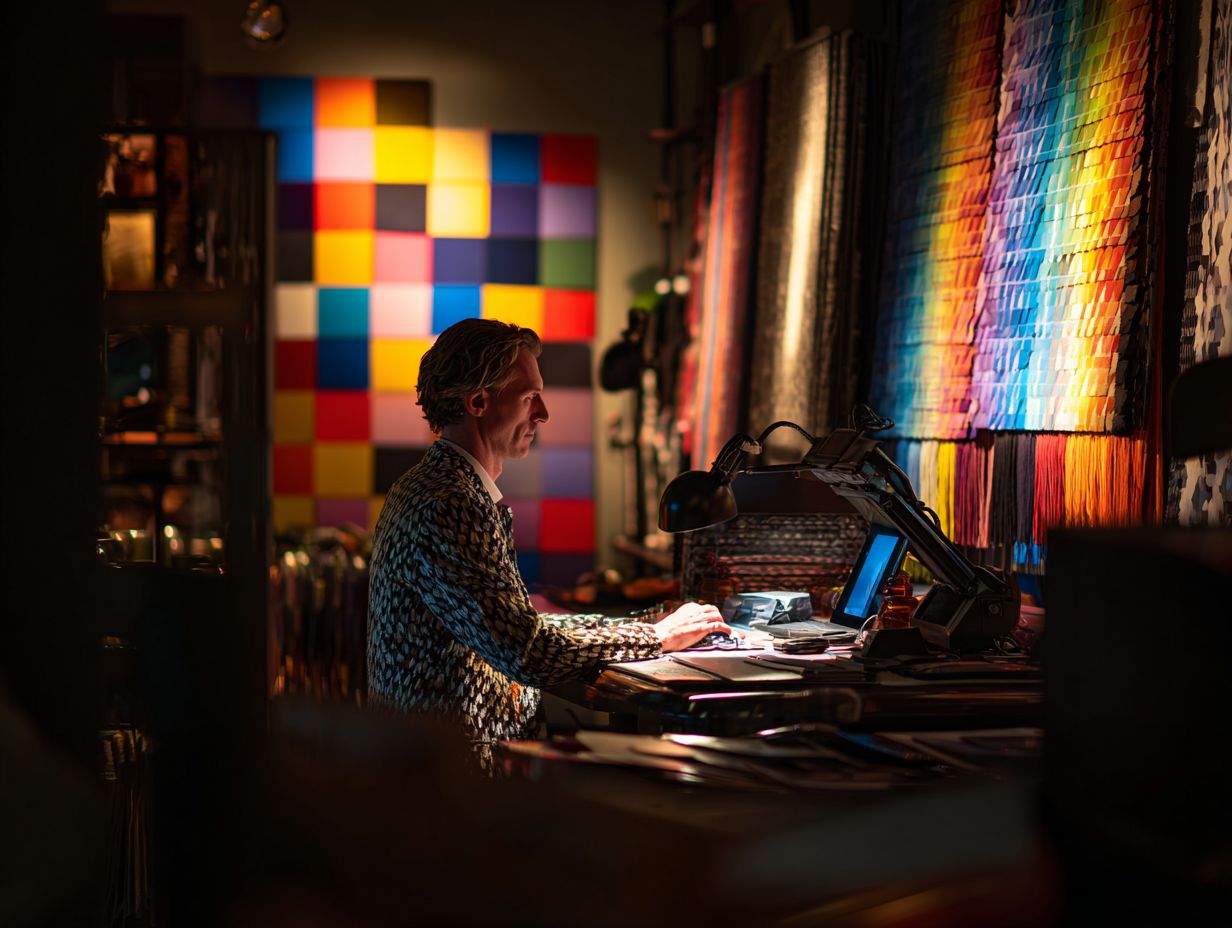
What is lighting alchemy?
Lighting alchemy refers to the use of different lighting techniques and color schemes to create a specific mood or atmosphere in a visual medium, often used in film lighting and photography techniques. It involves the careful manipulation of light and shadow to evoke certain emotions or convey a desired tone.
How do top creators use lighting alchemy?
Top creators use lighting alchemy as a powerful tool to enhance their storytelling and convey their artistic vision, understanding the nuances of viewer engagement and artistic direction. They carefully plan and execute their lighting choices to create a specific mood or atmosphere that supports their narrative and connects with their audience on a deeper level.
What role does color play in lighting alchemy?
Color is an essential element in lighting alchemy as it has a profound impact on the mood and tone of a visual medium, playing into the roles of color contrast and color symbolism. Different colors can evoke different emotions and set the tone for a scene. Top creators understand the power of color and use it strategically to enhance their storytelling through lighting.
How do shadows contribute to lighting alchemy?
Shadows are an integral part of lighting alchemy as they add depth, contrast, texture, and visual language to a visual medium. They can also create a sense of mystery and tension, adding to the overall mood and atmosphere. Top creators carefully consider the placement and intensity of shadows to achieve their desired effect.
What is the importance of mood in lighting alchemy?
Mood is a crucial aspect of lighting alchemy as it sets the tone and emotional connection for a visual medium, directly influencing the narrative structure and scene setting.
The use of lighting and shadow can greatly influence the mood and atmosphere of a scene, making it a powerful tool for top creators to shape the overall tone of their work.
Can anyone use lighting alchemy, or is it only for top creators?
While top creators have honed their skills in lighting alchemy, it is a technique that anyone can learn and use to enhance their visual creations by understanding illumination and artistic intent.
With knowledge and practice, anyone can effectively use lighting and color to shape mood and convey their desired tone in their work.
Curious about how top creators combine mindset, tech, and workflow? Explore Kthorn Bloom — a digital hub devoted to dissecting what makes great content truly magnetic.
For a deep dive into process over luck, read “The Art of Digital Magnetism: Why Great Content Is Never an Accident” — a breakdown of lighting, framing, and editing choices that turn good ideas into standout posts.
Love creator spotlights with a craft-first lens? Check out Spotlight on Local Talent: Hawai‘i for mood-driven shoots, natural light strategy, and location-savvy storytelling from island creatives.