
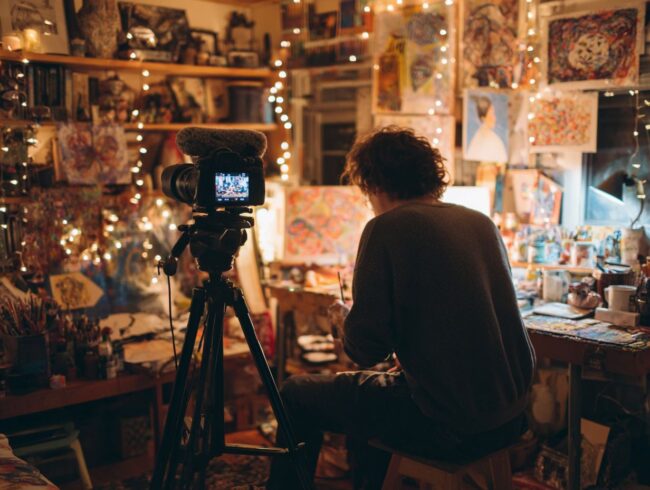
Ever tried to capture a moment so intimate it felt like you were eavesdropping on your own heart? Welcome to the world of POV filming, where the lens is your own eyeball, and emotions and filmmaking style are on full display! In this guide, I’ll spill the cinematic beans on how POV can emotionally connect audiences, enhance storytelling, tackle some common filming hiccups, and explore audience engagement strategies. Buckle up-your filmmaking perspective is about to get a whole lot more personal!
Understanding POV Filming and Cinematic Perspective
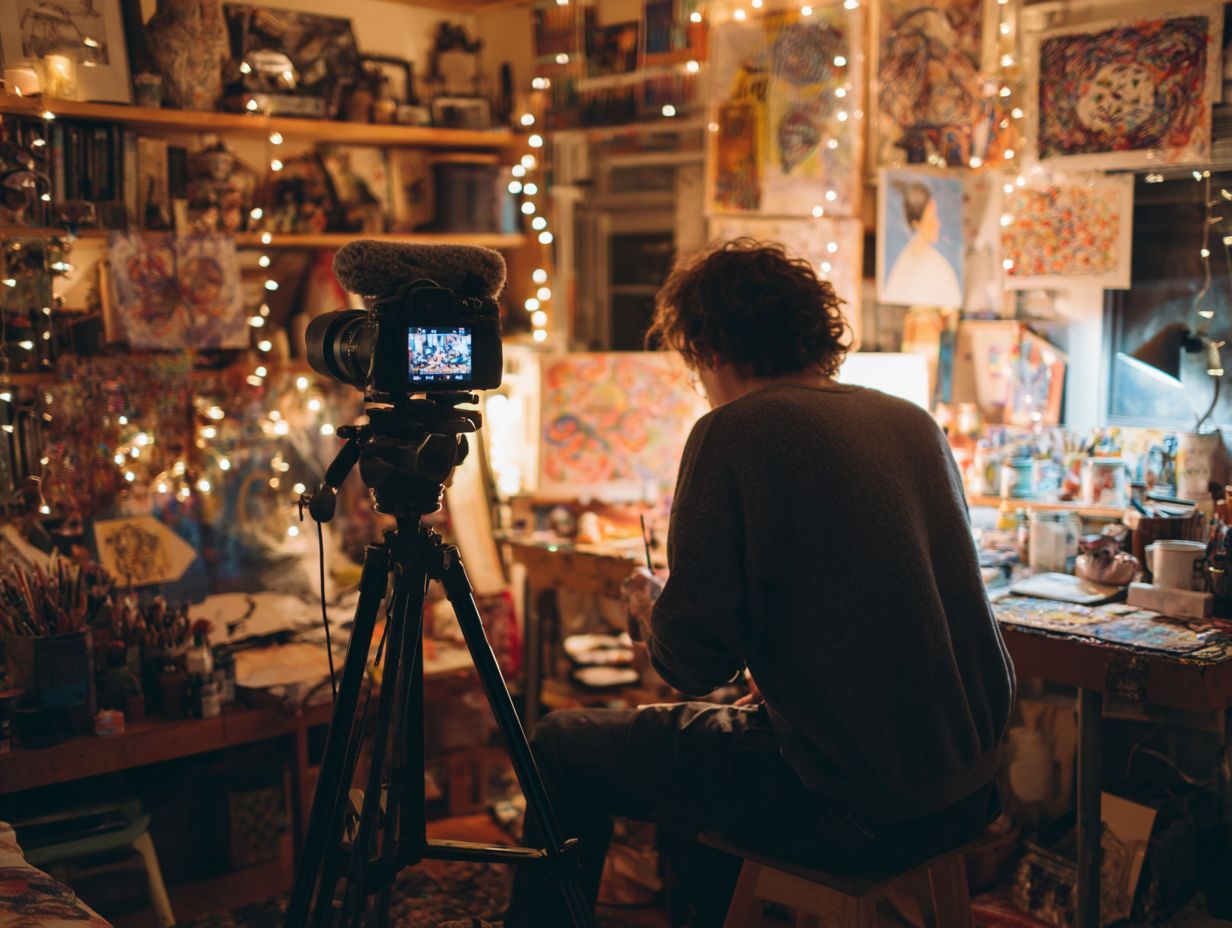
What happens when the camera becomes an extension of my eye, offering a subjective camera experience? Welcome to the fantastical realm of POV filming, where I can make everyone feel like they’re right in my shoes (or maybe even my flip-flops), creating an immersive experience.
To nail this technique and achieve visual fidelity, the first step is to pick the right camera-something like a GoPro Hero or a DSLR with a wide-angle lens will do the trick. It’s like choosing the perfect outfit for a first date; you want to make a good impression!
- Next up, I’ve got to stabilize my shots, which means breaking out the gimbal or tripod because shaky footage is so last season, ensuring dynamic visuals.
- When I’m filming, I keep my focus on the subject’s perspective, enhancing viewer perspective. For example, if I’m capturing a bike ride, I make sure to include the handlebars in the frame-nothing like a little authenticity!
- And let’s not forget about framing; keeping that horizon straight is crucial for that realism effect-no one wants a tilted world!
- Finally, I hop into editing software like Adobe Premiere Pro to polish everything up, making it shine like a diamond in a sea of pebbles, focusing on narrative immersion.
The Emotional Impact of POV and Intimate Storytelling
Imagine feeling every heartbeat of a character-talk about an emotional rollercoaster that enhances viewer emotions! That’s the magic of POV storytelling and emotional engagement.
Take “Birdman,” for instance. They use this continuous shot that’s like a backstage pass to the protagonist’s mind, pulling us straight into his confusion and despair. I mean, it’s like I’m right there with Riggan, dodging the chaos of a Broadway production while sweating under the pressure of it all.
Then there’s “The Diving Bell and the Butterfly.” With its first-person perspective, we’re seeing the world through the eyes of a paralyzed main character. It’s a masterclass in showcasing isolation and longing-definitely not a joyride, but it hits you right in the feels.
These techniques really create a deep emotional connection with the audience, turning us into emotional support humans for the characters’ wild rides.
Creating a Connection with the Audience through Intimate Content
In a world overflowing with content, how do I create that unbreakable bond with my audience through authentic storytelling? It’s all about being real and telling a good story. I love throwing in personal anecdotes to make my content relatable-just like those popular vlogs that connect through shared experiences.
I also like to keep the conversation flowing by asking open-ended questions and encouraging comments. Who doesn’t love a little feedback? Plus, I can whip up some eye-catching visuals with tools like Canva to make my stories pop.
And let’s not forget about the power of data! I dive into audience insights using platforms like Google Analytics or social media insights to fine-tune my content strategy. That way, I can make sure I’m hitting all the right notes for their specific interests and preferences.
Techniques for Effective POV Shots and Creative Storytelling
To really nail the art of POV and achieve emotional depth, I’ve got to navigate a twisty maze of techniques and choices, like some sort of cinematic Indiana Jones.
Now, let’s talk about those all-too-common blunders filmmakers trip over when trying to shoot POV. First off, neglecting stabilization is a rookie move-unless you want your footage to look like it was shot during an earthquake.
Then there’s the classic blunder of picking the wrong lens, which can turn your perfectly good scenes into a funhouse mirror of distorted perspectives. And let’s not forget about lighting; if I don’t plan it right, my visuals might end up looking like something from an old horror movie.
Ignoring the character’s immersion? That’s a one-way ticket to disconnecting the audience faster than you can say “plot hole.” And I can’t leave out audio quality-bad sound can turn an epic moment into a jarring experience.
To sidestep these pitfalls, I’m all about investing in a gimbal for stabilization, opting for a wide-angle lens to capture those authentic views, meticulously planning my lighting setups, making sure my character really interacts with their surroundings, and using top-notch sound equipment to pull everyone into the moment.
Enhancing Storytelling through POV and Narrative Techniques
I’m all about unlocking a new level of storytelling by diving into the treasure chest that is point of view and narrative structure. Seriously, embracing different perspectives can completely change how my story vibes with the audience, increasing psychological engagement.
Take “The Fault in Our Stars,” for instance-using first-person POV lets readers dive deep into Hazel’s rollercoaster of emotions, and let me tell you, it’s a ride!
To spice things up in my writing, I love to play around with switching perspectives in key scenes. Imagine writing one chapter from the hero’s viewpoint and then flipping the script to the villain’s in the next.
It’s like crafting a character arc worthy of “Game of Thrones” level drama, adding layers and cranking up the emotional stakes in my narrative. Who doesn’t want that?
The Role of Sound in POV Filming and Viewer Involvement
Sound has this sneaky way of sharing secrets that visuals just can’t capture, and that’s especially true in the world of POV filmmaking. Take the short film “Stuck in the Middle,” for example-it’s like a masterclass in how to blend killer sound design with POV visuals.
As the protagonist weaves through a bustling urban jungle, the ambient sounds-think traffic, distant chatter, and the rhythm of footsteps-plop you right into their shoes. It’s like being in the character’s head, feeling their anxiety and isolation firsthand.
And let’s not forget about using software like Adobe Audition for sound mixing. It’s a game-changer! It sharpens the audio and boosts the impact without drowning out those gorgeous visuals. Talk about an immersive experience!
Choosing the Right Equipment for POV and Cinematography
The right tools are like magic wands, turning my fuzzy ideas into a blockbuster narrative that could knock anyone’s socks off, ensuring effective shot composition and visual representation.
When I dive into the world of POV filming, picking the right camera, lenses, and accessories is like choosing the perfect outfit for a red carpet event-absolutely crucial!
Take the GoPro Hero10, for example. This little powerhouse is the darling of the action camera world, praised for its compact size and rock-solid stabilization. It’s like having a personal assistant that never lets me down, especially when I need to capture those wild, dynamic shots. And let’s not forget to slap on a wide-angle lens to make sure I’m capturing all the action around me.
Oh, and if I really want to take things up a notch, I consider using a gimbal, like the DJI Ronin-S. It’s my secret weapon for keeping things steady, especially when I’m in the middle of a heart-pounding chase scene. And seriously, never underestimate the power of good sound. An external microphone can make my audio pop and elevate my film’s storytelling from “meh” to “wow.”
Editing Techniques for POV Content and Film Editing
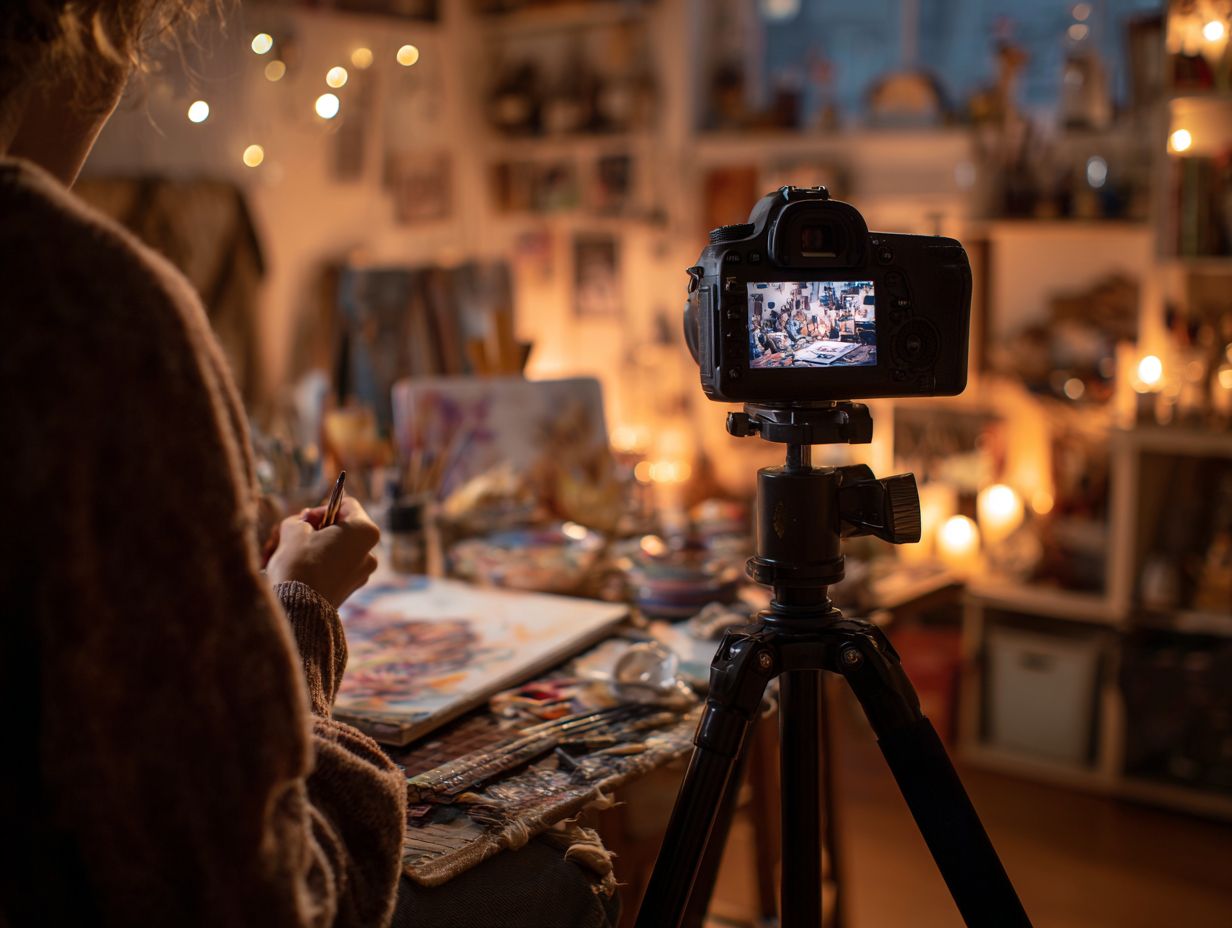
Editing is where the real magic happens-it’s like turning a pumpkin into a fancy carriage, only instead of a fairy godmother, I’ve got my trusty software. This is the moment when my raw footage transforms into an immersive journey that keeps viewers glued to their screens.
To amp up my POV content editing, I’ve got a few quick wins up my sleeve:
- First off, I trim the excess footage-aiming for tighter cuts is like giving my content a little spa day; it keeps things fresh and engaging, enhancing narrative perspective.
- Next, I dive into color grading tools like DaVinci Resolve, because who doesn’t want their visuals to have that cohesive, cinematic flair?
- Then, I roll up my sleeves and apply some sound design magic, using Audacity for noise reduction and crafting soundscapes that elevate the emotional stakes.
And let’s not forget about pacing! I alternate between close-ups and wider shots like a pro juggler to keep things interesting. Implementing these tricks can seriously elevate my narrative and keep my audience captivated from start to finish.
Case Studies: Successful POV Films and Intimate Relationship Portrayal
What can iconic films like ‘Peeping Tom’ and ‘Enter the Void’ teach me about the power of perspective and film genres? Well, let me tell you-it’s a masterclass in how point-of-view (POV) can twist a narrative and hook an audience right in the feels.
Take ‘Peeping Tom,’ for instance; it uses the camera as the voyeur’s eye, plunging me deep into the protagonist’s twisted mind. It’s like being a fly on the wall-if the wall was made of sheer horror.
Now flip the script to ‘Enter the Void,’ where we get an omniscient POV that invites us to hitch a ride on a cosmic journey through life, death, and rebirth, all wrapped up in some Tibetan Buddhist philosophy. Talk about a head trip!
This contrast really drives home the point that filmmakers have the power to pull our emotional strings just by choosing how they showcase their stories.
So, for any aspiring directors out there, the lesson is clear: don’t be afraid to play around with these techniques-whether you want to adopt a subjective lens that gets up close and personal or an expansive view that makes the world feel limitless. It’s all about cranking up that storytelling impact!
Challenges of POV Filming and Film Production
Every creative journey has its bumps in the road, and let me tell you, the art of POV filmmaking is no walk in the park. I often find myself wrestling with the challenge of keeping a steady shot, because let’s face it-handheld POV can turn my footage into a shaky rollercoaster ride. That’s why investing in gear like gimbals or stabilizers is a must.
Then there’s the art of using storytelling techniques to make the audience really feel like they’re in the character’s shoes. Positioning the camera just right is key-tools like chest mounts or head-mounted rigs can work wonders in creating that seamless perspective.
And let’s not forget about sound design. It’s a whole other beast; ambient noises can clash with the POV perspective and leave viewers feeling a bit overwhelmed.
My secret weapon for video content creation? Directional microphones or lavalier mics that scoop up clear audio, giving my audience a truly immersive POV experience. Who knew filmmaking came with so many fun challenges?
How to Overcome Common POV Filming Issues with Creative Direction
When life throws obstacles my way, I like to think that solutions in visual storytelling are just a creative pivot and a sprinkle of genius away.
To tackle those pesky common POV filming hiccups, I’ve got a nifty decision tree to guide me:
- First things first, I need to identify the problem.
- If my footage looks like it’s doing the cha-cha instead of a smooth glide, I whip out a gimbal or stabilizer, like the DJI Ronin-S, to bring some grace back into the frame.
- If the lighting has me squinting harder than a raccoon in daylight, I grab some portable lights like the Neewer 660 or a ring light to shine a little extra love on my scene.
- And if the sound is so bad it makes a cat fight sound like a symphony, I reach for an external microphone like the Rode VideoMicro, which can turn my audio from “meh” to “wow!”
By zeroing in on the specific challenge and wielding these tools like a filmmaker ninja, I can level up my POV shots and make my project shine brighter than my favorite pair of sunglasses.
The Future of POV in Filmmaking
As technology struts its stuff, the storytelling scene is getting ready for a makeover-POV is about to kick it up a notch. With the rise of Virtual Reality (VR) and Augmented Reality (AR), filmmakers are set to plunge audiences into experiences like never before.
Picture this: slipping on a VR headset and finding yourself in a character’s sneakers, making choices that actually twist the plot. It’s like being the director of your own adventure!
Studios are buzzing about using tools like Oculus Rift for those mind-blowing VR experiences and cool AR software like Blippar to sprinkle interactive magic over real-world settings, enhancing audience immersion.
These snazzy technologies are not just gadgets; they’re opening the door to more personalized storytelling, inviting us to dive in and engage emotionally, creating a connection through visuals.
Forget about traditional linear storytelling-this is all about transforming narratives into a dynamic, interactive thrill ride.
Buckle up; it’s going to be a wild journey of experiential content!
[Question] What Makes POV Filming Unique?
What is it about POV that lets me slip right into the shoes of the characters, enhancing emotional resonance?
POV filming is like a VIP pass to the character’s mind, aligning the camera’s perspective with their viewpoint and creating a connection that’s almost too real to handle. It’s like I’m right there with them, feeling their emotions and experiencing their wild actions firsthand.
Take a GoPro, for instance. It’s the ultimate tool for capturing those adrenaline-packed moments in extreme sports. And then there’s the steadycam, which adds dramatic flair to narrative films-talk about a game changer.
Filmmakers really know how to blend sound design, intimate close-ups, and dynamic motion to pull me into the story, creating a sensory experience.
When they mix these elements just right, I can’t help but feel like I’m not just watching the story unfold, but actually participating in it. It’s a rollercoaster ride of emotions, and I’m here for it!
[Question] How does POV affect audience perception?
How does the viewer’s gaze shape the story they’re about to dive into? Let’s unpack this fascinating conundrum.
Films are like crafty magicians, using different point-of-view (POV) tricks to manipulate audience response and how we perceive the tale unfolding before our eyes.
Take “Birdman,” for example-those continuous shots throw you right into the whirlwind of the protagonist’s mind, making you feel like you’re stumbling through their chaotic reality, where the line between fantasy and reality is as blurry as my vision after a long day.
On the flip side, we have “The Shawshank Redemption,” which rolls out the red carpet for a classic omniscient narrator. This approach gives us a bit of breathing room, letting us reflect on the deeper themes of hope and perseverance without feeling like we’re trapped in the protagonist’s head.
Each technique plays a pivotal role in how we, the audience, connect emotionally with the characters and their journeys, amplifying the narrative experience to a level that’s hard to ignore.
[Question] What genres benefit most from POV filming?
![[Question] What genres benefit most from POV filming?](https://kthornbloom.com/wp-content/uploads/2025/09/discover-the-impact-of-pov-filming-for-intimate-content-9b.jpeg)
Does every genre get the same warm and fuzzy feelings from the magical lens of POV, or are there some that just shine a little brighter? Some genres absolutely thrive on that subjective perspective, cranking up the emotional connection and storytelling to eleven.
Take horror films like “The Blair Witch Project,” for example, which utilize POV for an intimate visual experience.
They dive headfirst into the subjective viewpoint, wrapping viewers in a cocoon of fear so thick you can almost feel the goosebumps. On the flip side, character-driven dramas like “Her” really hit the emotional sweet spot by giving us intimate peeks into the characters’ thoughts and feelings. It’s like having a heart-to-heart with a friend, allowing us to empathize on a whole new level.
And let’s not forget about sci-fi flicks like “Moon.” They use POV to tackle those big, existential questions through personal experiences, making us ponder life while munching on our popcorn.
Filmmakers really need to think about what their genre demands emotionally when picking a POV style, because it can totally make or break the audience’s connection to the story.
Tips for Beginners in POV Filming
Diving into the world of POV can feel like trying to untangle a ball of Christmas lights, but it doesn’t have to be that chaotic. To make life a little easier, I’ve got some practical steps up my sleeve.
- First off, I need to figure out the specific POV styles-first-person, second-person, and third-person-each one adding its own flavor to the narrative stew.
- Then, I’ll practice writing short scenes from each perspective to really get a feel for their emotional punch. For instance, I can whip up a scene in first-person to spill my character’s inner thoughts, then flip the script to third-person for a wider lens on the whole cast.
And let’s not forget about handy tools like Scrivener, which help me keep my thoughts organized, or writing prompts that spark my creativity like a double-shot espresso. This whole approach is bound to boost my confidence and sharpen my skills over time.
Collaborating with Actors for Authentic POV and Human Connection
How do I make sure my actors deliver performances that feel as real as a Saturday night drama?
First off, I kick things off with some good old-fashioned open communication during rehearsals. I encourage my actors to spill their interpretations of the script and dive deep into their characters’ backstories like they’re uncovering family secrets.
I’ve found that tossing in a bit of improvisation works wonders for helping them connect with their roles. It’s like giving their performances a shot of espresso-suddenly they’re awake and richer than ever!
Plus, using tools like character journals is a game-changer; it’s like a diary for their characters, where they can jot down everything from their favorite pizza toppings to their biggest fears, enhancing character-driven content.
After every performance, I gather the crew for some focused feedback sessions. It’s my version of a post-game analysis, where actors can reflect on how the audience reacted and tweak their approach.
This whole collaborative vibe not only amps up the authenticity of their performances but also strengthens the ensemble dynamic, fostering interpersonal relationships-because we all know that a great show is better when everyone’s in sync!
The Importance of Pre-Production Planning
Behind every great film, there’s a pre-production plan that’s more robust than my morning coffee-and trust me, that’s saying something.
First things first, I nail down my vision and goals. Then, I whip up a detailed script breakdown to figure out where I’m filming, who’s in the cast, and what crew members I need-because budgeting effectively is key, and nobody wants to pull a “where did all the money go?” moment.
I can’t stress enough the importance of a shooting schedule; I’ve learned to love tools like StudioBinder for keeping everything organized and my sanity intact. And let’s not forget the pre-production meeting-gathering everyone together ensures we’re all on the same page and minimizes those awkward moments when someone shows up at the wrong location.
I’ve made my share of rookie mistakes, like not communicating enough with the crew or totally forgetting about contingency plans for when life throws a curveball.
Trust me, setting aside time for rehearsals can elevate performance quality and help my film hit the ground running right from the start.
[Question] How can POV enhance intimacy in storytelling?
Intimacy in storytelling? Oh, it’s all about the point-of-view (POV) and how I choose to play my cards. When I dive into a first-person POV, it’s like inviting readers right into my head-thoughts, emotions, and all. Talk about a deep connection through immersive storytelling!
Imagine a scene where I’m spilling my anxieties in an internal monologue just before a big moment. It’s like a front-row seat to my inner turmoil.
Now, if I switch gears to a third-person limited POV, I can still keep things intimate by closely following a character’s journey while maintaining a little narrative distance. It’s like watching a movie with that perfect balance of closeness and just enough space to breathe, enhancing the visual narrative.
And let’s not forget about the magic of crafting scenes with rich sensory details and emotional depth. That’s what takes intimacy up a notch, making my character’s journey not just relatable, but downright captivating with visual intimacy!
[Question] What are the ethical considerations in POV filming?
Every lens tells a story, but let’s talk about the ethical responsibilities that come with capturing a narrative from a specific point of view-because, believe me, it’s not just about rolling the camera and hoping for the best. Understanding the situational context is crucial.
-
First up, transparency is key. I always make it a point to clue my audience in on the perspective I’m presenting, especially when diving into marginalized stories. A little voiceover magic or some behind-the-scenes peeks can go a long way in showing just how I fit into the narrative puzzle through film techniques.
-
Next, informed consent is non-negotiable. If I’m showcasing someone’s life or experiences, I make sure they’re in the loop and onboard. Respecting their autonomy is crucial, and let’s be real-trust is the name of the game.
-
And let’s not forget about those pesky biases in narrative framing. I strive for authenticity, which means teaming up with folks from the communities I’m representing. It not only enriches the storytelling but also helps hit that sweet spot of balanced viewpoints. After all, storytelling is a team sport!
[Question] How can POV be used in virtual reality content?
As virtual reality catapults storytelling into a whole new dimension, I can’t help but wonder how point of view (POV) fits into this immersive playground. It’s like placing viewers right in the heart of the action with film audience engagement!
With POV filming in VR, I become part of the story, and let me tell you, it’s a game-changer.
Take the Insta360 ONE X2, for example-this nifty little gadget captures every angle of a scene. It’s like having eyes in the back of my head, letting me look around freely and soak up every detail. And just when I thought things couldn’t get better, I discover spatial audio, which adds sound cues from specific directions. Suddenly, I’m not just watching; I’m living the experience.
In the end, when I combine these dazzling tools, I dive deep into narratives, transforming my passive viewing into a rollercoaster of active emotional experiences. Who knew storytelling could be this thrilling?
Frequently Asked Questions
What is the significance of POV filming in creating intimate content and enhancing film theory?
POV (Point-of-View) filming allows the audience to experience the content from the perspective of the subject, creating a more immersive and intimate viewing experience.
How does POV filming differ from traditional filming techniques?
In traditional filming, the camera is usually positioned at a distance from the subject, whereas in POV filming, the camera is typically attached to the subject or held in their hand, giving the audience a first-person perspective, emphasizing proximity and emotional narrative.
What types of content are best suited for POV filming?
POV filming is most effective for creating intimate content that is personal and emotional, such as vlogs, travel videos, and even certain types of documentaries that utilize documentary style.
Can POV filming be used for professional or commercial purposes?
Yes, POV filming can be used for professional or commercial purposes, but it is important to carefully consider the target audience and the message you want to convey before using this technique with production techniques.
What are some tips for creating compelling POV content?
To create engaging and intimate POV content, it is important to carefully choose your subject and their actions, use a stable camera or equipment, and edit the footage to enhance the emotional impact with creative vision.
Are there any potential drawbacks to using POV filming for intimate content?
While POV filming can be a powerful tool for creating intimate content, it can also be disorienting or even nauseating for some viewers. It is important to use this technique sparingly and consider the potential impact on the audience connection.
Curious about how top creators combine mindset, tech, and workflow? Explore Kthorn Bloom — a digital hub devoted to dissecting what makes great content truly magnetic.
For a deep dive into process over luck, read “The Art of Digital Magnetism: Why Great Content Is Never an Accident” — a breakdown of lighting, framing, and editing choices that turn good ideas into standout posts.
Love creator spotlights with a craft-first lens? Check out Spotlight on Local Talent: Hawai‘i for mood-driven shoots, natural light strategy, and location-savvy storytelling from island creatives.