
Algorithms are like that unpredictable friend who suddenly decides to change all the plans-just when you thought you had everything figured out! As these digital forces transform the creative landscape, staying inspired can feel like chasing a mirage. In this rollercoaster of innovation, I’ll explore how to embrace change, diversify inspiration, and even turn social media from a distraction into a goldmine of ideas. Buckle up-let’s dive into the art of idea generation on demand, leveraging cognitive flexibility and adaptable content creation strategies!
Understanding the Impact of Algorithms on Creativity and Market Demands
What if algorithms are more than just a bunch of numbers? They’re like the backstage pass to the creative world, altering the way I think and create.
Take Spotify, for instance. Those clever algorithms whip up personalized playlists that feel like they were made just for me, helping me stumble upon tracks I might never have found on my own. It’s like having a DJ in my pocket who knows my taste better than I do!
And then there’s Canva, which uses algorithms to recommend design templates that match my project’s vibe. Talk about making the creative process smoother than a fresh jar of peanut butter.
Research shows that these tailored suggestions don’t just make me happy; they also push me to experiment with new styles. It’s like a creativity workout, helping me flex those innovative muscles and think outside the box. Algorithms? More like creativity’s secret sauce!
Embracing Change: Why Adaptability is Key
The secret sauce to creative success? It might just be my ability to roll with the punches.
Take, for example, this small marketing agency that was all about traditional media. Things were going great until digital marketing came along and suddenly, clients were showing less interest than a cat in a bathtub. Rather than clinging to the past like a toddler with a security blanket, they decided to embrace the winds of change.
They retrained their staff in social media strategies and search engine optimization (SEO), making the leap into the digital realm, while enhancing emotional intelligence and client-focused networking.
With nifty tools like Hootsuite for managing social media and Google Analytics to keep tabs on their performance, they transformed their offerings into comprehensive digital packages faster than you can say “SEO.” And guess what? Within a year, they doubled their client base!
It just goes to show that being adaptable not only builds resilience but also opens up brand new markets-like finding a hidden level in a video game.
Diversifying Your Inspiration Sources
Ever stop to think about where inspiration might be hiding? It’s like a game of hide-and-seek, and I’m here to share three golden spots to unearth those fresh ideas.
-
First up, nature walks are my secret weapon for creativity. There’s nothing quite like wandering among the trees, soaking in the intricate patterns of leaves and the wild colors of flowers. It’s like Mother Nature herself is throwing a creativity party, and I’m invited!
-
Next, diving into literature is like taking a mind-expanding vacation. Whether I’m lost in classic novels or savoring contemporary poetry, I find deep insights and thought-provoking gems waiting for me on every page.
-
And let’s not forget about the online communities! Platforms like Reddit or specialized forums are treasure troves of diverse perspectives and experiences. Engaging with others can turn my thought process upside down in the best way possible.
Each of these sources hands me a unique spark of inspiration, so I try to weave them into my routine to keep those creative juices flowing. Who knows what brilliant ideas await just around the corner?
Leveraging Social Media for Fresh Ideas
Scrolling through social media might just be the secret sauce to cooking up my next big idea! But let’s be real-it’s easy to trip over common mistakes that can totally kill my creativity.
One major blunder? Mindlessly consuming content like it’s a bottomless buffet, instead of actively engaging. That’s a recipe for becoming a creativity couch potato!
Another faux pas is sticking to just one platform like it’s my favorite pair of sweatpants. Diversifying my sources-like checking out TikTok for the latest trends and diving into LinkedIn for some professional wisdom-can really get those creative juices flowing.
And let’s not forget about analytics! Ignoring those numbers is like trying to navigate without a map. They help me figure out what my audience actually cares about, which is crucial for my creative process.
So, I make it a point to track engagement metrics to fine-tune my approach and spark some innovative thinking. Who knew social media could be such a treasure trove?
Collaborating with Others for New Perspectives
Ever tried brainstorming with someone who sees the world through a completely different lens? Let me tell you, it could be the best decision you’ve ever made!
I like to set up a structured brainstorming session using the ‘Six Thinking Hats’ method. It’s like speed dating for ideas, but with way more hats involved! This technique encourages everyone to don different perspectives-think emotional vibes with the red hat and sharp analytical skills with the black hat.
I kick things off by laying out the problem and then let each participant express their viewpoint while metaphorically wearing their chosen hat. For example, one team member can dive deep into potential risks while another goes wild with creative solutions.
This method not only sparks lively discussions but also ensures that a buffet of diverse opinions serves up richer ideas and more innovative outcomes. Who knew wearing hats could be so much fun?
Setting Up a Regular Brainstorming Routine
Routine might sound about as exciting as watching paint dry, but when it comes to brainstorming, it can actually be a game changer.
Take the marketing team at Company X, for example. They decided to spice things up with a weekly brainstorming session-just one hour every Wednesday.
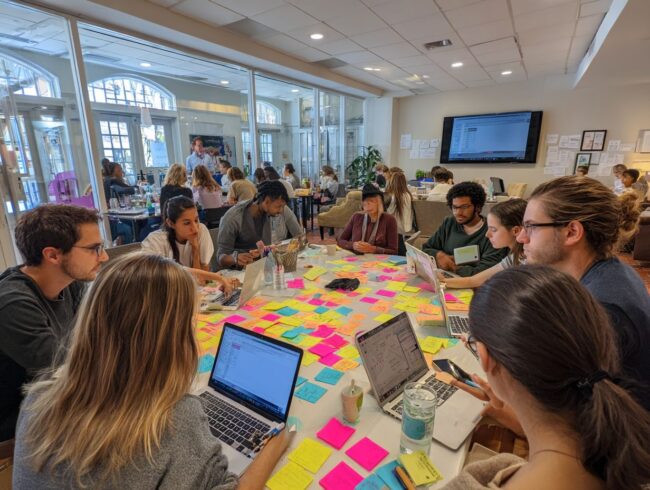
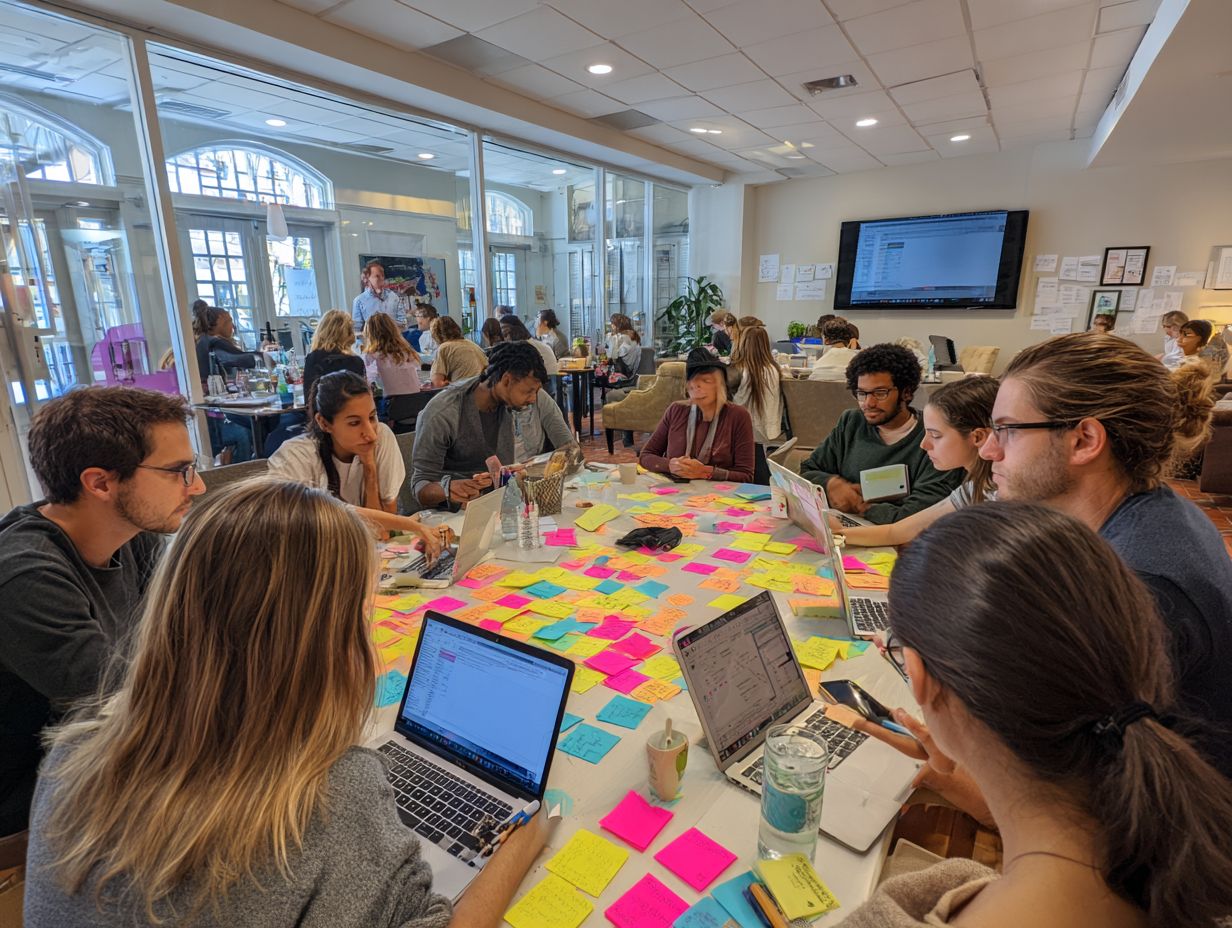
What they found was pretty eye-opening: consistently gathering input from every department didn’t just sprinkle some diversity into the mix; it sparked a collaboration bonanza! They brought in tools like Miro for some visual mapping magic and Slack for keeping the conversation rolling.
Fast forward three months, and bam-they launched two successful campaigns that boosted engagement by a whopping 40%.
This whole experience proves that carving out regular time for creative thinking can turn into spectacular results for any organization. Who knew a little structure could lead to such brilliance?
Utilizing Mind Mapping Techniques
Picture this: my ideas sprouting and branching out like a magnificent tree-welcome to the delightful world of mind mapping!
To whip up an effective mind map, I kick things off with a central concept that captures my core idea. Then, I let my creativity run wild as I branch out into subtopics, splashing colors and images everywhere to make everything stick in my memory like glitter at a craft party.
There are some snazzy software options like XMind and MindMeister that make this process a breeze, complete with templates to get me started and collaborative features that turn team brainstorming into a fun group project.
But hey, if I’m feeling extra hands-on, nothing beats the tactile joy of sketching on good old paper with markers. It’s like giving my creativity a workout!
My goal? To keep things clear and organized, making sure each branch leads smoothly to the next, like a perfect family tree of ideas.
Exploring Different Mediums for Inspiration
Can you believe that the way I consume content can actually kick my creativity into high gear? Different formats-like podcasts, videos, and articles-come with their own little perks.
For example, I can be strolling along, earbuds in, listening to a podcast, and suddenly, boom! Ideas start popping up like popcorn. Then, there are those tutorial videos that make concepts click in my brain like a light switch.
To truly tap into this creative potential, I’ve learned to mix things up. I carve out a few hours each week to dive into different formats. YouTube becomes my go-to for instructional content, while I subscribe to podcast powerhouses like NPR and Wondery for some seriously compelling storytelling.
Engaging with a variety of formats not only gives me fresh perspectives but can also crank my creative output up to eleven, ensuring content strategy meets user needs through quality over quantity principles.
Keeping a Creative Journal

What if I let you in on a little secret? Keeping a simple journal could be my golden ticket to unlocking a whole new level of creativity. Just ask famed writer Anne Lamott or artist Julia Cameron-they swear by journaling to dive deep into their thoughts.
I start by dedicating a mere ten minutes each day to free-writing. It’s like a mental spring cleaning that clears out the cobwebs and gets those fresh ideas bubbling up. And if I’m feeling a bit stuck, I can spice things up with prompts like:
- What inspires me today?
- Describe a vivid dream.
These little nuggets of inspiration invite me to reflect more deeply. I also love using tools like the Five Minute Journal or apps like Day One to organize my musings, making sure that my creativity doesn’t just come in bursts, but flows consistently.
I’ve discovered that journaling before bed is a game changer. Not only does it help settle my mind after a long day, but it could also lead to those “Eureka!” moments when I wake up the next morning. Who knew my own thoughts could be such a treasure trove?
Engaging with Online Communities
Feeling like a lone wolf on my creative journey? Well, it turns out online communities are the perfect pack to join for some much-needed camaraderie, fostering authentic engagement and community building.
I mean, why not dive into platforms like Behance? It’s like a creative playground where I can flaunt my portfolio, enhance user engagement, and rub elbows with other artistic minds. And let’s not forget about Reddit – it’s got these lively subreddits like r/CreativeWriting and r/ArtFundamentals, where I can share my masterpieces, utilize feedback loops, and soak up some constructive criticism from fellow creatives.
Facebook groups like ‘Writers’ Cafe’ or ‘Designers Unite’ are like cozy clubhouses where I can swap stories, content curation techniques, and tips with others who get it, encouraging knowledge sharing and resourcefulness.
For some real-time collaboration, I can hop onto Slack or Discord, where tons of channels are buzzing with creative projects just waiting for my input, supported by collaboration tools and a multi-channel strategy.
Jumping into these communities doesn’t just pump up my creativity; it also serves up a hefty side of support that can make this artistic adventure a lot more enjoyable.
What Role Does Curiosity Play in Idea Generation and Problem-Solving?
Curiosity might just be the secret sauce I’ve been missing for that creative success recipe, a key to intellectual curiosity-so how do I whip it up?
I start by sprinkling in some daily habits that encourage me to question everything and explore like a kid in a candy store. One of my favorites is keeping a curiosity journal where I jot down all the quirky questions that pop into my head throughout the day. It could be anything from pondering how a gadget works to scratching my head over why a book is written in a certain style.
I also carve out some time each week to dive into a new topic, thanks to the treasure trove of online courses and documentaries. With platforms like Coursera and YouTube at my fingertips, fueling my curiosity has never been easier-and who knows? That next big idea might just be a click away!
How Can You Measure Your Creative Output?
Measuring creativity is like trying to catch smoke with my bare hands-pretty tricky, right? But what if I could get my hands on a way to keep tabs on its ups and downs effectively, using data-driven insights and competitive analysis?
To tackle creativity quantitatively, I like to zero in on some specific metrics. Think along the lines of how many ideas I’m churning out, how much time I’m spending in those brainstorming marathons, and the variety of solutions I’m throwing into the mix.
For example, tracking the number of unique ideas I whip up during a design sprint can really shine a light on my creative rollercoaster. Tools like IdeaScale or Stormboard are my trusty sidekicks, letting teams submit and rank their bright ideas collaboratively-because who doesn’t love a good idea showdown?
And let’s not forget about those regular team reflections! They offer some juicy qualitative insights, letting me compare what I’ve cooked up against industry benchmarks. That way, I can see how my creative escapades lead to some seriously successful innovations.
Who knew measuring creativity could be such a fun ride?
What Techniques Help Overcome Creative Blocks?
Feeling like my creativity has hit a brick wall? No worries, I’ve got a few tricks up my sleeve, including creativity boosters and motivational techniques, that might just kickstart those brain cells.
First off, I like to shake things up by changing my environment. Instead of being glued to my desk, I might plop down in a caf or a park. There’s just something about that fresh air and a latte that can spark a whole new wave of ideas.
Then there’s the classic timer trick. I set it for 10 minutes and write like my life depends on it-grammar and structure be damned! I just let the thoughts pour out like they’re trying to escape.
And if I’m really in a bind, I turn to prompts from handy tools like Writing Exercises or Brainstormer. They’re like wild cards for my brain, throwing unexpected angles at familiar topics.
These little shifts can really re-energize my creativity and help me see things from a brand new perspective.
The Importance of Rest, Downtime, and Adaptability in Business
It might sound a bit quirky, but sometimes just kicking back and doing absolutely nothing can work wonders for my creative brain. Seriously, research suggests that taking a breather can supercharge my cognitive performance and fuel my creativity. Just stepping away for a quick 10-minute break can help me see problems in a whole new light, letting those bright ideas pop up like popcorn in a hot pan.
I like to use tools like the Pomodoro Technique, which is basically my secret weapon for productivity. I dive into 25 minutes of laser-focused work, then reward myself with a glorious 5-minute break.
Walking in nature or practicing mindfulness meditation? Those are my go-to moves for boosting creative thinking. By embracing these little practices, I can crank up my productivity and come up with some seriously innovative ideas. Who knew doing less could actually mean doing more?
Staying Updated with Trends and Trend Analysis Without Losing Originality
In a world where trends are as slippery as a bar of soap, how do I stay relevant without losing my one-of-a-kind flair? Simple: I sprinkle some trend analysis into my content strategy like it’s confetti at a party. Tools like Google Trends are my trusty sidekicks, helping me sniff out the hot topics in my niche.
Once I’ve got my finger on the pulse of those trendy vibes, I whip up content that marries them with my personal twist. For instance, if sustainability is all the rage, I chat about it through the lens of my own experiences or brand story-because who doesn’t love a good anecdote with their eco-friendly tips?
And let’s not forget about the content calendar! I craft a delightful mix of evergreen topics and trend-focused gems, making sure I keep the original content flowing like a fine wine that never runs out.
My audience deserves a steady stream of relevant and engaging content, served with a side of my unique voice.
How to Create a Personal Inspiration Toolkit?
Imagine having a treasure trove of resources that sparks your creativity, boosts content innovation, and encourages proactive ideation-sounds pretty dreamy, right? So, how do I whip that up?
First, I dive into selecting a bunch of eclectic tools that resonate with my interests. Pinterest is my playground, where I create themed boards to pin down all that visual inspiration. It’s like curating my own art gallery, but with less dusting involved.
Then, I bring in a digital notebook like Notion to catch all my brilliant (or at least mildly interesting) ideas and sketches. It’s the ultimate organizational wizardry for my thoughts, keeping everything neat and tidy instead of scattered like confetti.
To really get those creative juices flowing during downtime, I add a collection of podcasts or audiobooks that tickle my fancy. Nothing like some stimulating audio to keep my brain buzzing! And let’s not forget a killer playlist of energizing music to crank up my focus-because who doesn’t need a personal soundtrack for their creative exploits?
By mixing all these elements, I’m crafting my very own toolkit that fuels inspiration anytime I need a little creative kick.
The Future of Creativity and Digital Storytelling in a Digital Age

As I zoom into the future, I can’t help but wonder: what’s creativity going to look like in this wild digital landscape, especially with the algorithm impact on creative processes?
Well, emerging technologies are shaking things up big time, giving rise to new ways to express myself. Take AI-driven design tools like Adobe Sensei, for example. It’s like having a super-smart sidekick that helps me brainstorm ideas and streamline my creative chaos.
Then there’s virtual reality (VR)-talk about a game changer! It’s allowing me to craft immersive experiences that completely flip the script on storytelling.
Plus, with the rise of collaborative online spaces, I can jam with diverse teams from all over the globe. Who knew brainstorming could happen in pajamas from the comfort of my couch?
All these shifts mean creativity is about to get a major makeover. It’s not just going to be more collaborative; it’s also going to be more accessible. Technology is handing out tools and platforms that used to be VIP-only, leveling the playing field for everyone.
So, buckle up-creativity is about to take us on a wild ride!
How can curiosity lead to innovative thinking?
Curiosity is like the secret key to the treasure chest of innovation and divergent thinking- but how does that actually play out? Well, curiosity pushes me to ask questions and hunt for answers that can spark some truly wild ideas, supported by creativity workshops and brainstorming techniques.
Just think about Thomas Edison; that guy’s relentless questioning about electric light led him to invent the practical incandescent bulb. Talk about lighting up the room!
Then there’s Marie Curie, who didn’t just sit around; she dove headfirst into radioactivity and opened the floodgates for advancements in nuclear physics and medicine. Go, science!
Now, nurturing curiosity is all about creating spaces where experimentation and questioning are not just welcomed but celebrated. Whether it’s brainstorming sessions, collaborative workshops, or even structured creativity routines, I love exploring different angles and possibilities.
It’s all about laying the groundwork for the groundbreaking innovations of tomorrow-because who doesn’t want a front-row seat to the next big thing?
What are some ways to cultivate curiosity?
Curiosity isn’t just a nice personality trait; it’s more like a secret superpower that I can totally flex- but how do I get it to work for me?
One of my go-to moves for nurturing my inner detective is to embrace my love for questioning everything in sight. I start by tossing out open-ended questions about my daily life and surroundings. For example, when I stumble upon a new concept at work, I’ll ask myself, “What else does this remind me of?” or “How can I use this to spice up other parts of my life?”
I even carve out 15 minutes each day for a mini expedition-whether it’s wandering around a local museum, diving into an article about technology trends that’s outside my usual interests, or dabbling in a new hobby. Over time, this little routine works wonders, sharpening my creative thinking and letting me tackle challenges from all sorts of quirky angles.
Who knew curiosity could be such a game-changer?
What metrics can indicate creative success?
Understanding creative success isn’t just about collecting shiny trophies-it’s about the numbers, baby! Embracing ideation strategies can also play a vital role in refining our approach. I’m talking measurable metrics that give me the real scoop. Key players in this game include engagement rates, audience growth, and return on investment (ROI).
For example, keeping an eye on my social media interactions can help me figure out which content hits all the right notes with my audience.
I love using tools like Google Analytics to snoop around my website traffic and user behavior. They show me which of my creative masterpieces are actually bringing visitors to the party.
And let’s not forget about Hootsuite-my trusty sidekick for checking engagement across multiple channels without needing to juggle a dozen tabs.
By regularly diving into these metrics using visualization techniques, I can make smarter decisions, tweak my strategies, and ultimately crank up my impact in whatever creative field I’m playing in.
How can feedback improve your idea generation process?
Feedback isn’t just a fancy word for critique; it’s like rocket fuel for creativity and design thinking. To really tap into the power of feedback for idea generation, I like to use some structured methods-think brainstorming sessions or those oh-so-fun structured feedback forms.
During brainstorming, which often involves market research, I make it a point to encourage everyone to throw their ideas onto the table without fear of judgment. It’s amazing how that can spark unexpected connections!
Plus, I love whipping up anonymous surveys with tools like Google Forms to gather thoughts on specific concepts. You’d be surprised at the nuggets of wisdom that pop up when people feel free to share without their names attached.
By mixing both approaches, I’m essentially creating a creative cocktail of diverse perspectives, which just makes my ideas stronger and more innovative. Who knew feedback could be this much fun?
What are some quick exercises to spark creativity?
Need a little creative kick in the pants? I’ve got some quick exercises that’ll get those ideas flowing faster than coffee on a Monday morning.
- Word Association: Grab a timer and set it for five minutes. Think of a topic and jot down any words that pop into your head. It’s like a mental game of hopscotch, and you might just stumble upon some surprisingly brilliant connections.
- Free Writing: This one’s a fun mess-set aside ten minutes to write non-stop about whatever idea or problem is nagging at you. Don’t bother with grammar or making sense; just let your thoughts spill out like a toddler after a sugar rush. You’ll be amazed at the hidden gems that pop up!
- List Making: I love a good list-who doesn’t? Create a list related to your project, whether it’s potential characters, themes, or even settings. It’s like building a brain playground, organizing your thoughts while sparking new ideas. Trust me, it’s a fantastic way to kickstart your creativity!
How can changing your environment influence creativity?
Sometimes, all it takes is a little change of scenery to give my creative juices a much-needed boost. Research backs this up-apparently, different environments, whether it’s the serene embrace of nature or the lively buzz of a caf, can really spark creativity.
In fact, studies suggest that soaking up the great outdoors can supercharge my problem-solving skills. Who knew?
I might just grab my notebook and head to a park or cozy coffee shop, where the ambient noise works like magic on my focus. If I’m stuck indoors, I can always cheat a little with apps like NatureSounds or Coffitivity to recreate that vibe.
And let’s not forget about good old-fashioned workspace shuffling and thought leadership in workspace design. Just moving my desk by a window can feel like a breath of fresh air-literally and figuratively!
It’s all about experimenting with different settings until I stumble upon the perfect spot that flips the creativity switch.
Concluding Thoughts on Addressing Creative Blocks
Creative blocks are like that stubborn traffic jam on my creative highway, but how I tackle them using SEO techniques can really shape my artistic journey. When the ideas aren’t flowing, I have a few sneaky tricks up my sleeve.
First off, I mix up my environment. Whether it’s finding a new coffee shop or just rearranging my workspace, a change of scenery can kickstart those fresh ideas faster than a double shot of espresso.
Then, I set a timer for a short, focused brainstorming session-hello, Pomodoro Technique! I dive deep for 25 minutes, and then it’s break time. Clearing my mind is crucial; I can’t let those thoughts get too crowded.
I also love to get visual with tools like MindMeister for mind mapping my thoughts. And when I’m feeling particularly stuck, I turn to prompts from creative platforms like The Story Shack. These techniques not only spark my creativity but also help me build a routine for conquering those pesky creative challenges.
Who knew fighting off creative blocks could be this fun?
Final Reflections on Idea Generation

The adventure of coming up with ideas is a never-ending saga, filled with continuous learning and a pinch of adaptability. To get those creative juices flowing, I like to whip out a few of my favorite tricks:
-
First up, I carve out some time for brainstorming sessions, incorporating keyword optimization to maximize output. I set a timer for 15 minutes and let my thoughts run wild-no idea is too silly! And if I’m feeling fancy, I bust out MindMeister to map it all out visually. Who doesn’t love a good mind map?
-
Next, I make sure to engage with the world around me. A little stroll here, a book from an unexpected genre there, or even striking up a conversation with a random stranger can spark unexpected brilliance. You never know where inspiration might come from!
-
Lastly, I like to throw a little challenge into the mix by imposing some constraints: I limit myself to a specific number of ideas or focus on a narrow theme, much like audience analysis. It’s like giving my brain a fun riddle to solve, forcing me to look at things from a fresh angle and igniting that innovative thinking. Who knew restrictions could be so liberating?
Frequently Asked Questions
1. What is idea generation on demand and why is it important?
Idea generation on demand refers to the ability to constantly come up with new and creative ideas, even when faced with challenges such as changes in algorithms, through agile methodology. It is important because it allows businesses to stay relevant, adapt to changes, and continue to grow and innovate.
2. How do algorithms impact idea generation on demand?
Algorithms can have a significant impact on idea generation on demand as they can change the way content is shown and distributed online, influencing user experience. This can make it challenging for businesses to reach their target audience and come up with fresh ideas that will resonate with them.
3. What are some strategies for staying inspired when algorithms change?
One strategy is to stay up-to-date with changes in algorithms and adapt your content accordingly using project management tools. Another is to diversify your sources of inspiration and constantly seek out new ideas and perspectives. Collaborating with others and engaging in brainstorming sessions can also help reignite creativity.
4. How can businesses use data to improve their idea generation on demand?
Data can provide valuable insights into consumer behavior and preferences, which can inform the development of new ideas and productivity hacks. By analyzing data, businesses can also identify trends and patterns, allowing them to create content that will be more likely to resonate with their target audience.
5. What role does experimentation play in idea generation on demand?
Experimentation is crucial in idea generation on demand as it allows businesses to test out new ideas and see what resonates with their audience, embracing cross-disciplinary thinking. This can involve A/B testing, trying out different formats and platforms, and analyzing the results to refine and improve future ideas.
6. How can businesses stay ahead of the game and anticipate changes in algorithms?
Regularly monitoring industry news and updates can help businesses stay informed about changes in algorithms. It is also important to keep track of competitors and analyze their strategies. Seeking out feedback from your audience and staying in touch with your customer base can also help identify potential changes or shifts in consumer behavior.
Curious about how top creators combine mindset, tech, and workflow? Explore Kthorn Bloom — a digital hub devoted to dissecting what makes great content truly magnetic.
For a deep dive into process over luck, read “The Art of Digital Magnetism: Why Great Content Is Never an Accident” — a breakdown of lighting, framing, and editing choices that turn good ideas into standout posts.
Love creator spotlights with a craft-first lens? Check out Spotlight on Local Talent: Hawai‘i for mood-driven shoots, natural light strategy, and location-savvy storytelling from island creatives.